Key points:
- More than 500 bikes were recycled and distributed for free into communities in north and east Glasgow
- Majority of people receiving bikes were children and young people
- The potential for bike reuse in Scotland is high: research shows that, in just twelve months, enough bikes were refurbished to benefit more than 10,000 people
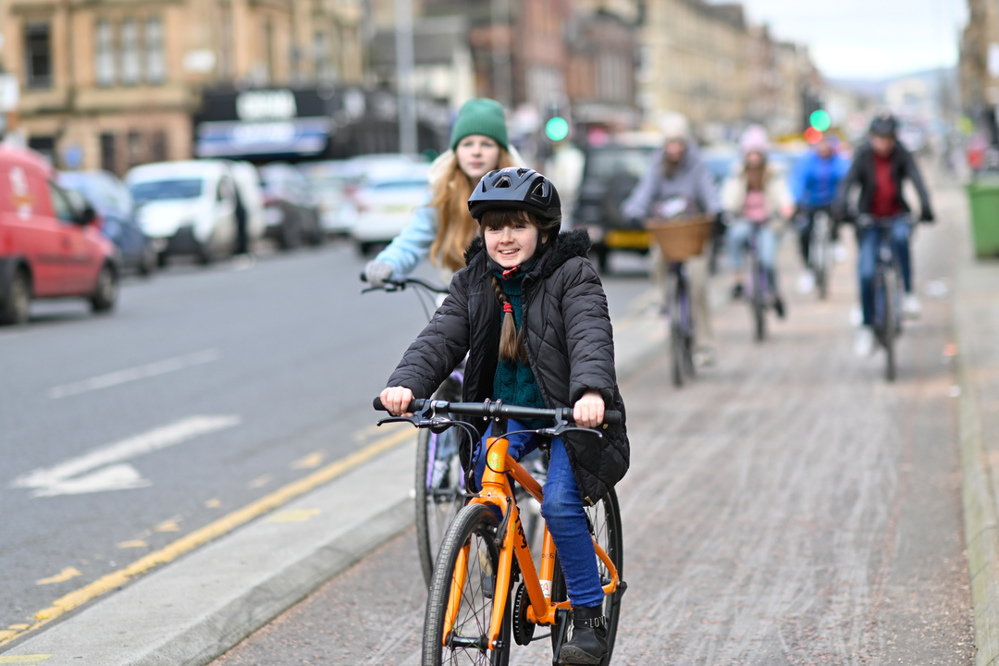
The pilot is funded by the Scottish Government’s People and Place Programme and delivered through Strathclyde Partnership for Transport (SPT), working with Glasgow City Council, HMP Barlinnie, St Paul’s Youth Forum and Cycling Scotland.
Saving unwanted bikes from metal recycling in Glasgow
Every year, Glasgow City Council waste recycling centres receive hundreds of old, unwanted or damaged bikes, dropped off by members of the public. In this pilot project, staff from three recycling centres were trained to sort bikes into three categories: those needing minor repairs, those requiring extensive refurbishment and those beyond repair that could be dismantled for parts.
A lot of people in here are quite encouraged by that because we tell them what it’s for: it’s a positive impact. It’s concrete evidence that recycling’s actually working

Repairing bikes at HMP Barlinne and building practical skills
The bikes were collected weekly and dropped off at HMP Barlinnie, where they were repaired as part of the prison’s skills development programme delivered by St Paul’s Youth Forum.
At any one time, 16 people serving sentences or in custody worked in the prison workshop, learning new skills and opportunities for a future in the community after custody.
It’s a privilege to be here. It keeps me busy, it keeps my mind clear. To know a kid is going to get a bike and have a smile on their face, I’m proud. I did something good. It’s a joy for me to work here.

Redistributing refurbished bikes for free in north and east Glasgow
The refurbished bikes were then redistributed for free into the local community, available for children and people who would otherwise face financial barriers to cycling.
The impact at a community level was clear:
• More than 500 bikes recycled and distributed for free to those who would otherwise be unable to buy one
• The majority of people who received a bike were children or teenagers
• Bikes were redistributed to communities in north and east Glasgow
When you’re dealing with families who don’t have a lot of money, or people who’ve got no bike, or a school with no bikes, and being able to give them that bike for free and just see the happiness: it’s tremendous. You can buy a second-hand bike for £100, but in a lot of communities, £100 is a lot of money that’s maybe needed for feeding the family that week. By trying to keep it free, it’s encouraging active travel and so it’s a win-win for us.
Hearing the gratitude of the families that have received bikes, really brings home the importance of this project.
Further information
Having a bike: why it matters
Travelling by bike helps connect people to work, education, social activities, and wider opportunities. Across Scotland, a lack of access to affordable transport can prevent people from accessing essential services and job opportunities, which is why bike reuse can support both active travel and social inclusion
The potential for bike reuse in Scotland
The potential impact of bike reuse in Scotland is high: research from Circular Communities Scotland found that in just twelve months, 200 tonnes of waste metal was diverted from landfill and 8,000 bikes refurbished, benefitting more than 10,000 people.