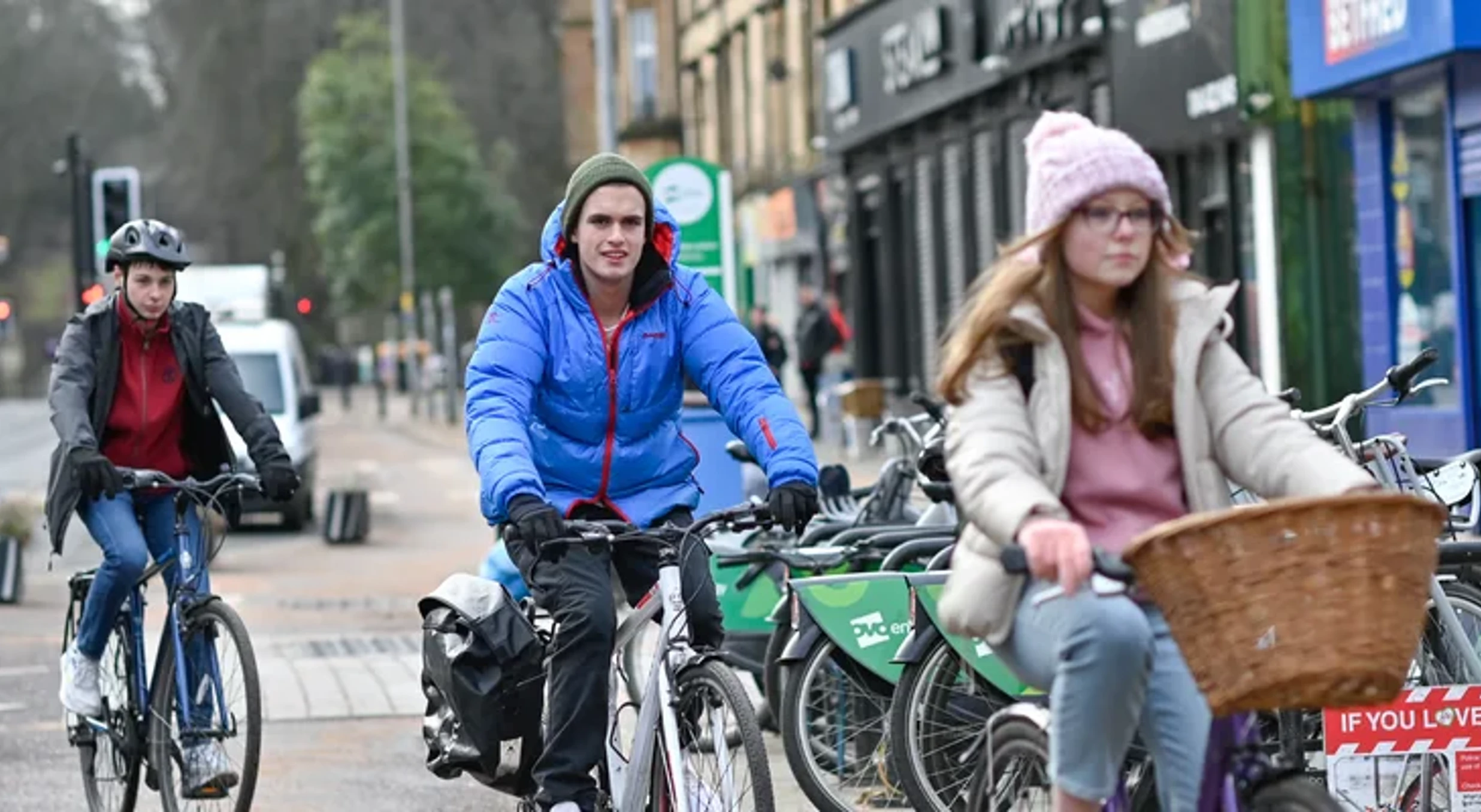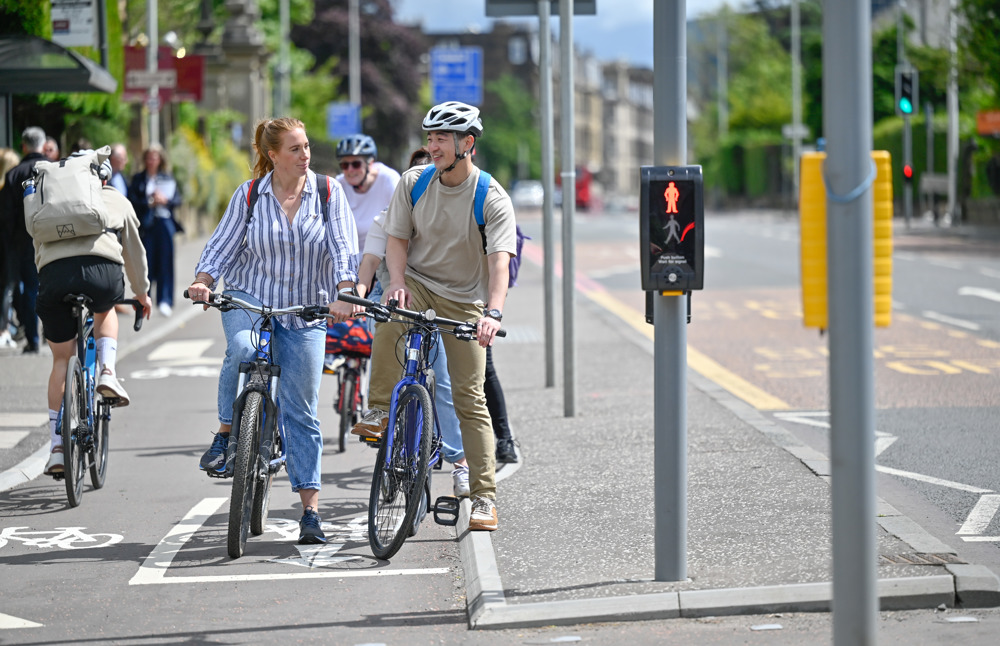
New traffic data analysed by Cycling Scotland, Scotland’s national cycling charity, shows the continuing success of high-quality cycle lanes, with record levels of cycling seen on key routes in Edinburgh and Glasgow.
Key findings from 48-hour traffic surveys carried out across Scotland on 13th and 14th May 2026 include:
- On Edinburgh’s Leith Walk, more bikes than cars were recorded during morning rush hour for the first time.
- Edinburgh’s York Place recorded its highest cycling modal share yet (4.7% of all journeys were by bike, up from 2.1% in May 2021).
- Glasgow’s Victoria Road sees continuing growth in cycling, with 38% more daily bike journeys than the year before.
- Three Glasgow streets with new dedicated cycle lanes recorded their highest ever cycling modal shares – Clyde Street (13.6%), Garscube Road (6.2%) and Victoria Road (16.6%).
- Cycling more than doubled on Glasgow’s East City Way following route improvements, rising to nearly 700 bike journeys per day in May 2026, up from 300 per day in May 2024.
- Strong peaks in morning and evening rush hours show that improved cycle routes are helping more people travel by bike for everyday journeys, like getting to and from work.
Over a 48-hour period in May 2026, traffic surveys recorded 5,653 bike journeys on Edinburgh’s Leith Walk – a record for a Cycling Scotland traffic survey at this location.
Cycle journeys accounted for 11% of all methods of travel on Leith Walk, with more bikes than cars counted during one morning rush hour period (8-9am, Wednesday 13th May) - the first time this has been observed on an on-street cycle route in Edinburgh.
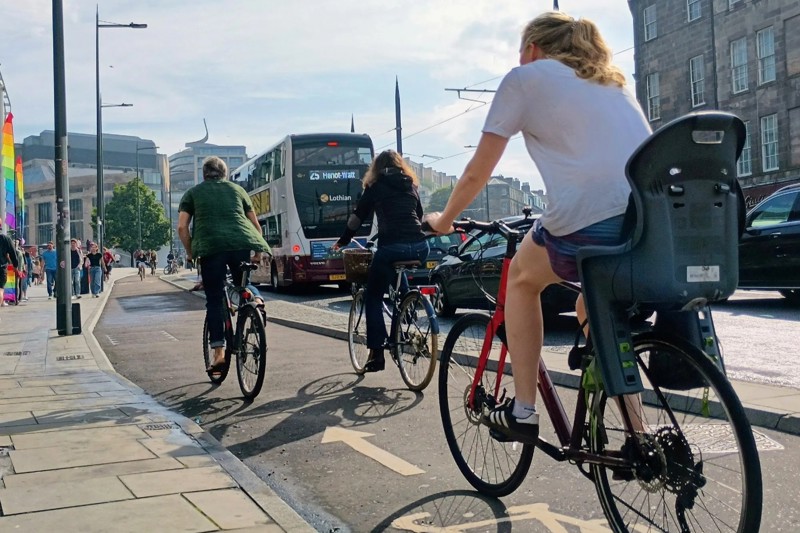
Image: People cycling on Leith Walk in Edinburgh
In addition to results from this survey, a fixed cycle counter on Picardy Place at the top of Leith Walk has been recording its highest levels of cycle traffic in 2026. 67,572 cycle journeys were recorded through all of May 2026 compared with 54,193 throughout May 2025 (an increase of 25%).
On nearby York Place, where protected cycle lanes now connect the City Centre West East Link route to Leith Walk, 2,018 bikes were recorded over the 48-hour period, amounting to 4.7% of all travel methods recorded, both marking new records for the location.
This cycling modal share is a significant increase on the first survey conducted on York Place in May 2021, when bikes accounted for only 2.1% of journeys – a sign of the growing impact of the new cycling infrastructure.
Data visualisations and cycle counts in Edinburgh and Glasgow
In Glasgow, three streets that have all had high-quality protected cycle lanes installed in recent years, including Clyde Street, Garscube Road, and Victoria Road, all recorded their highest ever number of cycle journeys.
Over the 48-hour survey period, 2,146 bikes were recorded on Garscube Road, where a 1km protected bidirectional cycle lane connects Maryhill to the city centre. 3,489 bikes were recorded on Clyde Street, where several cycle routes meet at the edge of the city centre.
On Victoria Road 5,637 bikes were counted over the two days – 38% more bike journeys than in May 2025, showing the continued impact of the landmark protected cycling route between the Southside and the city centre. Overall cycling accounted for 16.6% of all travel methods counted on Victoria Road, itself a new record modal share for the location.
Similar cycling modal share records were broken at Garscube Road (6.2%, up from 5% in May 2025) and Clyde Street (13.6%, up from 12.5% in May 2025).
More bikes than cars were recorded at all rush hour travel peaks on Victoria Road, a trend which has been established since the previous traffic survey in September 2025.
Additionally, 1,955 people were counted cycling on Byres Road in the city’s West End, where cycle lanes have been completed between Dumbarton Road and University Avenue. Cycling represented 7.9% of all methods of travel on that section of Byres Road.
Before and after slider: Byres Road in Glasgow in 2020 and an image of the completed cycle route in 2026
At all of these locations, strong peaks in cycling were seen at morning and evening rush hours, indicating that the new infrastructure is helping more people to travel by bike for everyday journeys, like commuting to and from work.
Analysis of traffic levels shows that long-term increases in cycling modal share at these locations are primarily due to more people cycling, rather than any corresponding decrease in vehicle traffic.
Are cycling modal share increases down to a reduction in vehicles?
In addition to these snapshot traffic surveys, data from the fixed cycle counter network also shows the long-term impact of investment in new, high-quality cycle lanes elsewhere in Glasgow.
Data from a counter on the East City Way cycle route on London Road shows cycle traffic more than doubled from an average of 300 cycle journeys a day in May 2024 to nearly 700 journeys a day in May 2026.*
This increase in cycling follows significant improvements to the 8km route connecting communities in the East End to the city centre, including physical protection for the cycle lanes and completion of a Dutch-style cycle priority junction at the corner of London Road and the Clyde Gateway road.
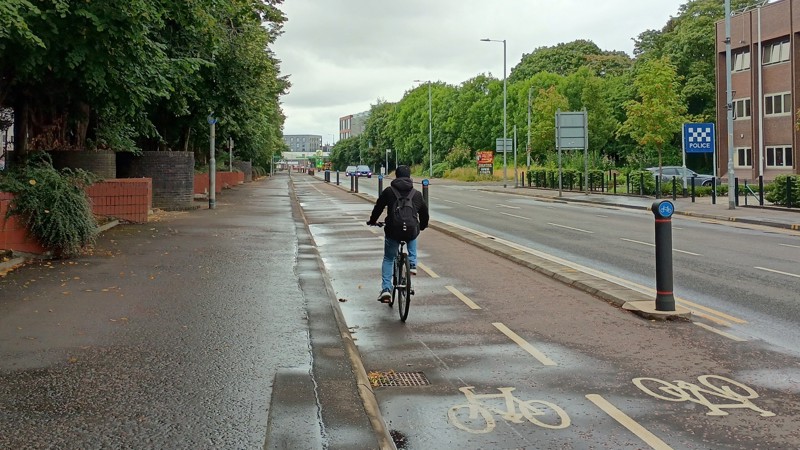
Image: a person cycles along Glasgow's East City Way protected cycle route
Increases in cycling were also picked up elsewhere in Scotland, with record levels of cycling on South Road in Peterhead and the highest cycle counts since 2020 on Paisley Road in Barrhead.
Traffic surveys carried out by Cycling Scotland, in partnership with local authorities, involve a temporary camera counting all passing traffic at more than 50 locations across Scotland. Conducted biannually each May and September, with funding from Transport Scotland, these nationwide traffic surveys help to track changes in modal share, highlighting how new high-quality cycle routes are supporting more people to make sustainable journeys.
"I feel so much safer on the cycle lane"
Kirsty Milton-Moir, an NHS health visitor whose role involves visiting families to check on babies' development, has been using new cycle lanes to get to work and appointments in Glasgow. Kirsty said: "I've found that cycling is much quicker than driving, so that’s cut a massive proportion of time from my visits. It gives you the headspace you need and allows me time to reflect and think about how best I can support the families on my caseload."
"Seeing all the people cycling on the cycle lane is amazing. I feel so much safer on the cycle lane where I know that that area is for people on bikes, and there are no cars."
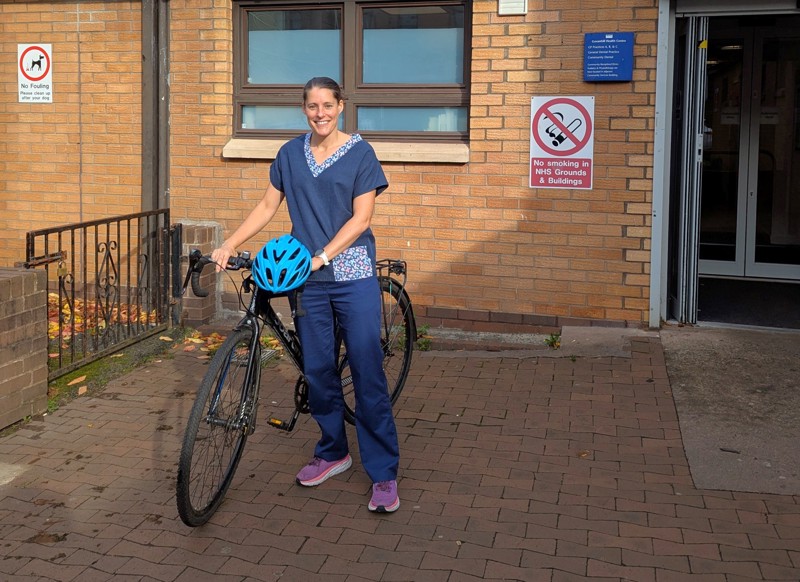
Image: NHS health visitor, Kirsty, pictured smiling with her bike outside the health centre where she works
Cabinet Secretary for Economy, Tourism and Transport Stephen Flynn said: "I am pleased to see Cycling Scotland’s latest figures on cycle lane use in Edinburgh and Glasgow. The record levels of use particularly on Glasgow's South City Way and Edinburgh's City Centre West-East Link demonstrates that the infrastructure we are providing is helping more people than ever travel by bike for everyday journeys.
"Active travel is pivotal in helping people save money, improve their health and reduce transport emissions – walking, wheeling and cycling is transformational for both people and planet.
"We are investing £226 million in active and sustainable travel this year, and the evidence shown by these figures highlights how this funding is creating safer and easier routes that will lead to more people choosing to walk, wheel and cycle for everyday journeys."
Transport and Environment Convener, Councillor Stephen Jenkinson, said: "These new figures speak for themselves. Over the last year, we’ve seen city cycling records being consistently broken. This is a direct consequence of our commitment to creating and improving cycling infrastructure across Edinburgh, as part of our City Mobility Plan. We’ve also seen the overwhelming popularity and success of our cycle hire scheme, delivered by Voi, providing a convenient and economic way for people to get around.
"It’s never been easier to cycle in the Capital, so I’d encourage anyone thinking about it to give it a try."
Cllr Angus Millar, Glasgow City Council Convener for Transport and Climate, said: "Cycling Scotland’s latest figures are really encouraging and show the clear impact of investing in safe, high-quality cycle routes across Glasgow. The increase in cycling on routes such as Victoria Road, Clyde Street, Garscube Road, Byres Road and London Road shows that more people are choosing to travel by bike for everyday journeys.
"These routes are helping to make cycling a more practical and accessible option for more Glaswegians, while supporting our wider work to create safer streets, improve air quality and give people more choice in how they travel around the city. These results show what can be achieved when people have safe, attractive options to travel by bike, and they provide a strong foundation for further improvements across the city."
Keith Irving, Chief Executive of Cycling Scotland, said: "What we see clearly from the data is where local authorities and Scottish Government are investing in protected cycle lanes and improved networks of cycling routes, more people are travelling by bike."
"The high volumes of cycling that we continue to see around morning rush hour tells its own story, with people evidently using these new routes to make everyday journeys by bike, especially to work. We're also seeing signs of a strong network effect, as routes begin to join together and make more journeys possible.
"Altogether, more people cycling is a net benefit for everyone, for our health, for reducing harmful pollution and reducing congestion on our streets. We need more safe cycling routes, to bring these advantages to more people across Scotland."
Methodology & further links
- Cycling Scotland gathers and analyses data from the network of counters, traffic surveys and sensors active across all 32 of Scotland’s local authorities that comprise the National Monitoring Framework.
- Traffic survey data is collected by Cycling Scotland all-mode traffic surveys over a 48-hour period across 51 sites in all 29 of Scotland's local authorities. They are conducted twice a year - in May & September. This is supplemented by data from AI sensors in three local authorities.
- Data from periodic traffic surveys and real time data from fixed cycle counters across Scotland can be viewed and downloaded from the Cycling Open Data portal.
- Full results of traffic surveys conducted on 13th and 14th May 2026, including visualisations and historic data broken down by local authority area.
- *East City Way data as captured by cycle counter on London Road / Springfield Road, available on the Cycling Open Data portal.
- None of the figures presented here were affected by the July 2026 fire on Princes Street and its subsequent impact on bus and tram networks.