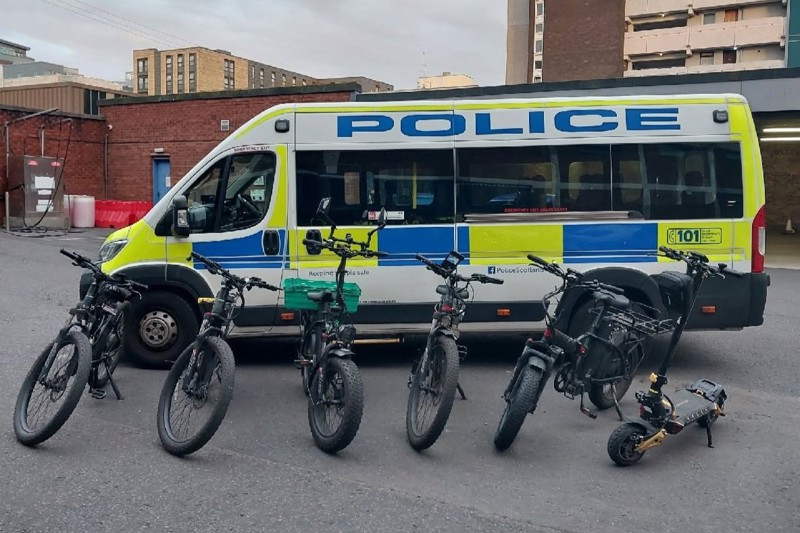
E-bikes are an increasingly common sight on our streets, helping more people travel more easily by bike and carry kids or goods in a cargo bike. Across Europe, it is a multi-billion pound industry, helping cut emissions (this week’s heatwave demonstrated again the urgent need for this).
However, the illegal use of electric off-road motorbikes and modified bikes, which have a throttle converting them to a moped or motorbike (unless type approved), have also increased in recent years. Concerns have been raised in the Scottish Parliament since last month’s election more than once and there is cross party agreement that action is needed. This is a complex issue to tackle where one straightforward objective needs emphasised- keeping everyone safe with a harm reduction approach.
By law, an electrically assisted pedal cycle (EAPC) bike should be limited to 250 watts, with an electrical motor cutting out at 15.5mph. If you see someone not pedalling and going fast uphill, they’re likely on a modified e-bike which should be considered a moped. In extreme situations, the risk is motorcycle-level acceleration and speeds without motorcycle-level safeguards.
We are all aware of the problems this creates, which are a blight on our local communities. The worst behaviour creates an unacceptable risk to people walking, wheeling or cycling, as well as to the riders themselves: more tragedies will occur unless action is taken.
There is a fire risk from modification kits and sub-standard lithium batteries. Online platforms sell these unsafe goods and shops sell e-scooters and motorbikes which can only be used legally on private land (with the landowner’s permission). Food delivery apps have an exploitative model that encourages faster speeds and undertakes no credible checks against illegal use of modified bikes, creating even more risk to a marginalised group.
Adequate regulation of the UK gig economy is long overdue. The police will receive more powers to tackle anti-social use of vehicles and while safely stopping offenders on electric motorbikes is incredibly challenging, it remains essential to focus on the most dangerous and harmful behaviours.
The cycling industry has responded to the problems that unlicensed and unregulated products are creating for us all, having reported concerns about sub-standard batteries since 2019. The E-bike Positive Campaign educates consumers on how to buy e-bikes from reliable retailers who will only supply, sell and repair reputable brands, batteries, chargers and other components.
An extensive report by a Westminster All Party Parliamentary Group has identified other solutions, especially to: make online marketplaces legally accountable for unsafe listings; reinstate 'worker' status for gig economy riders to guarantee rights and protections; and enforce compliance from delivery platforms, including real-time checks on bikes used by riders.
Tackling illegal electric motorbike use is a road safety priority. Many road safety partners are calling on the UK Government to enable stronger market regulation, improved enforcement and clearer consumer information.
We need to distinguish between dangerous machines designed for the dirt track and legal e-bikes, produced with rigorous product checks, which are a fantastic way for adults of all ages to get around and another brilliant tourism asset for Scotland.
As published in the Scotsman on 28th Jun 2026.

